
Category: Sleep

  • How to Make a Firm Mattress Softer

    How to Make a Firm Mattress Softer

    This article contains affiliate links. If you buy through these links, we may earn a commission at no extra cost to you.

    A mattress can feel too firm even when it is still in good condition. If you want a softer sleeping surface, you may be able to improve its comfort without replacing the whole mattress.

    This guide explores practical options, from checking your bedding and bed base to adding a mattress topper. We also explain what to check before buying, including firmness choices and return restrictions.

    Check Your Mattress Before Making Changes

    Before buying anything, check the condition of your mattress. A surface that feels too firm is a different problem from a mattress with visible dips, lumps, or uneven support. A topper adds a comfort layer, but it will follow the surface underneath rather than repair it.

    If your mattress is new, check the manufacturer’s guidance on its adjustment period and sleep trial. Keep the return deadline in mind while you decide whether the firmness suits you.

    Also check that your bed base meets the mattress manufacturer’s requirements. Avoid removing slats or changing the support system to soften the bed without checking those requirements first.

    Consider a Mattress Topper for Extra Cushioning

    If your mattress is supportive and in good condition but feels too firm on the surface, a softer mattress topper is one option to consider. It adds a separate comfort layer without replacing the mattress underneath.

    Start by deciding how much you want to change the feel. A thinner topper generally makes a smaller adjustment, while a thicker one creates more separation from the mattress below. The material and firmness also matter: a thick, firm topper will not necessarily make your bed feel softer.

    Memory foam typically offers a slower, more contouring feel. Latex usually feels springier and responds more quickly when you move. Wool and fiber toppers provide a different kind of cushioning. Your preferred feel should guide the choice.

    Check the return policy before ordering. Some toppers cannot be returned once opened, so choosing the right size, thickness, and firmness matters.

    One Option: PlushBeds Organic Latex Mattress Topper

    The PlushBeds Organic Latex Mattress Topper comes in 2-inch and 3-inch thicknesses, with several firmness choices and an optional organic cotton cover. If your mattress feels too firm, consider the softer options.

    Choose firmness and thickness based on your existing mattress and comfort preferences. Ask PlushBeds for guidance if you are unsure: the topper cannot be returned after opening. Its five-year limited warranty covers manufacturing defects and material quality, not dissatisfaction with the feel.

    We have not personally tested this topper. This overview is based on the manufacturer’s published information.

    Check Whether Your Bedding Is Making the Surface Feel Tighter

    Before adding a topper, check whether your fitted sheet or mattress protector is stretched tightly across the mattress. Bedding that is too small or too shallow can pull taut over the surface and may affect how it feels.

    Check the depth of your fitted sheet, especially if you already use a thick mattress pad. The corners should fit securely without forcing the mattress edges down.

    If you use a protector, check that it fits correctly and lies smoothly. A roomier sheet or a more flexible protector may help if tight bedding is contributing to the problem, though it will not change the firmness of the mattress itself.

    When a Topper May Not Be the Right Solution

    A topper is worth considering when you want to change the surface feel of a mattress that still provides even support. It is less useful when the mattress underneath is sagging, damaged, or uneven.

    If your mattress is new and still within its return or exchange period, compare those options before spending more on a topper. Exchanging it for a more suitable firmness may make more sense than adding another layer.

    Also consider the total cost. Include the topper, any optional cover, and deeper fitted sheets if needed. Check whether you can return the topper after opening, and avoid assuming that the brand’s mattress sleep trial also applies to its accessories.

    Please note: the PlushBeds topper cannot be returned after opening.

    Explore more practical tips in our Sleep section.
  • Can White Noise Help You Sleep Better?

    Can White Noise Help You Sleep Better?

    A fan humming in the background, rainfall sounds or a white noise machine can make a bedroom feel calmer. Many people use steady background sounds to help them fall asleep or avoid being disturbed by noises during the night.

    The idea is simple: a consistent sound may make sudden noises — such as traffic, voices or a door closing — less noticeable. But can white noise help you sleep better, or does it simply make the bedroom sound more relaxing?

    Research has produced mixed results, and white noise may be more helpful in some situations than others. Let’s look at what we know and whether it could be worth trying.

    What Is White Noise?

    White noise is a steady sound that contains many different sound frequencies at roughly equal intensity. The result is the familiar “hissing” sound you might hear from a fan, air conditioner or white noise machine.

    Because the sound is continuous, it can help mask sudden changes in the surrounding environment. A passing car, voices in another room or other intermittent noises may become less noticeable against a constant background sound.

    White noise is only one type of background noise used for sleep. Pink noise and brown noise have different frequency patterns and tend to sound deeper or softer. Many sleep apps and sound machines also offer nature sounds such as rain, waves or wind, which aren’t technically white noise at all.

    Does White Noise Actually Help You Sleep?

    White noise may help some people sleep, particularly when unwanted sounds are disturbing their sleep. By creating a steady background sound, white noise can make sudden noises less noticeable and may make it easier to fall asleep or stay asleep.

    However, research on white noise and sleep is still limited, and the results have been mixed. Some studies have found improvements in sleep in noisy environments, while others have found little benefit.

    This means white noise shouldn’t be viewed as a proven treatment for sleep problems. It may be more useful as a practical tool for masking disruptive sounds — for example, traffic, neighbors or other noises that are difficult to eliminate.

    If your bedroom is already quiet and you sleep well without background noise, there may be little reason to add white noise simply because it is popular.

    Who Might Benefit From White Noise?

    White noise may be most useful for people whose sleep is regularly disturbed by unpredictable sounds. If you live near a busy road, have noisy neighbors or share a home with people who keep different schedules, a steady background sound may make those interruptions less noticeable.

    It may also be useful when you’re sleeping somewhere unfamiliar, such as a hotel, where new sounds can make it harder to relax.

    However, white noise won’t address other common causes of poor sleep, such as stress, caffeine, an inconsistent sleep schedule or an underlying sleep disorder. If noise isn’t the reason you’re struggling to sleep, adding background sound may not make much difference.

    How Loud Should White Noise Be?

    White noise doesn’t need to be loud to mask background sounds. The goal is to create a gentle, consistent sound that makes sudden noises less noticeable — not to drown out everything around you.

    Keep the volume at a comfortable level and avoid placing a speaker or white noise machine directly beside your head. If the sound feels intrusive, makes conversation difficult or leaves your ears ringing, it is too loud.

    If you use white noise every night, choosing the lowest volume that still masks the disturbing sounds is a sensible approach.

    White Noise Machine, Fan or App — Does It Matter?

    You don’t necessarily need a dedicated white noise machine. A fan, smartphone app or speaker can all provide steady background sound, and the best option depends largely on what you find comfortable and convenient.

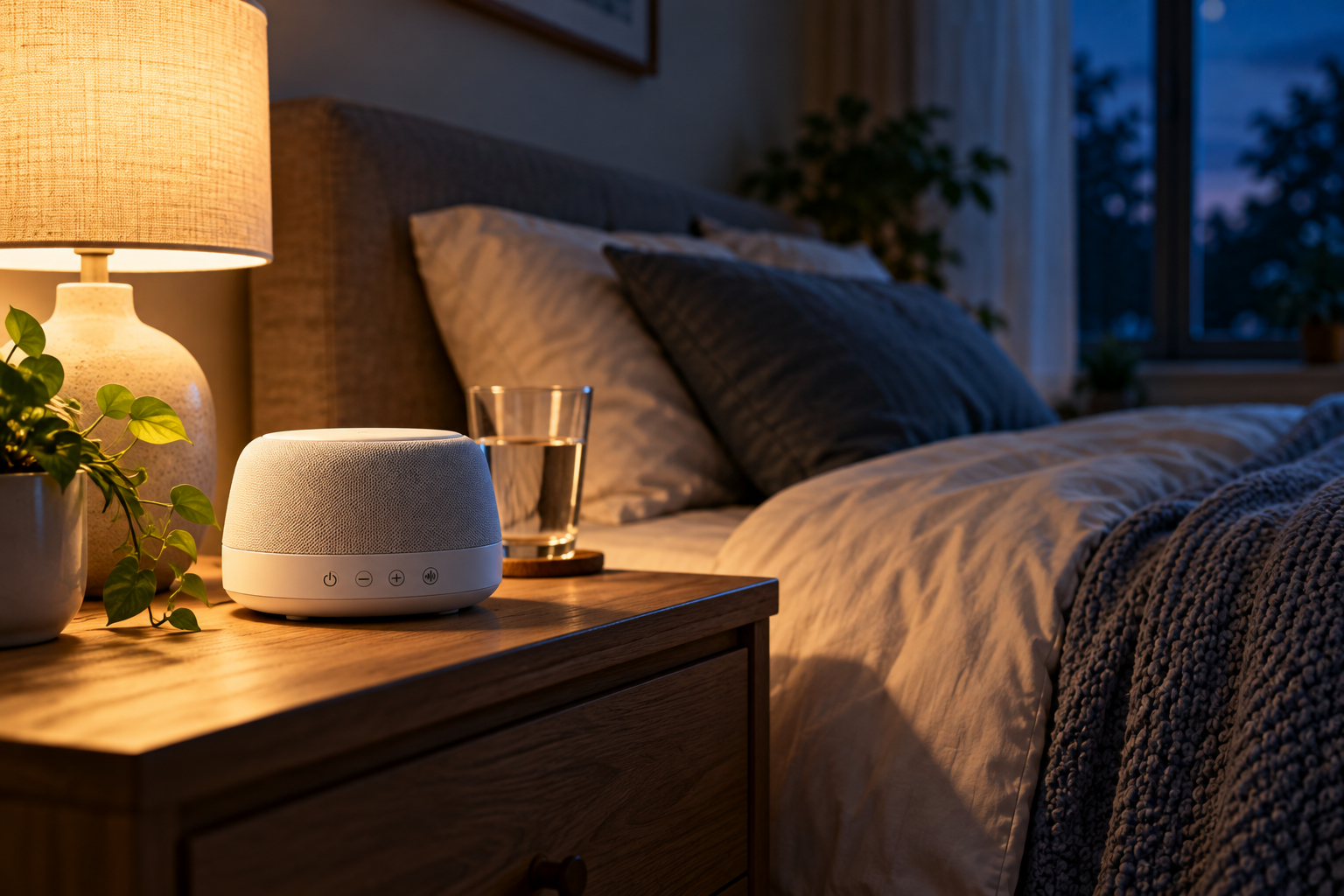
    Dedicated white noise machines can be useful because they’re designed to run continuously and don’t require your phone during the night. Many also offer different sounds and volume settings.

    A fan provides both background sound and airflow, while an app can be an inexpensive way to experiment with white noise before buying anything. If you use your phone, consider keeping the screen off and placing the device away from the bed rather than directly beside your head.

    The source of the sound may matter less than finding a steady, comfortable sound at a reasonable volume that doesn’t disturb your sleep.

    White Noise vs. Pink Noise vs. Brown Noise

    White, pink and brown noise all contain a range of sound frequencies, but they distribute those frequencies differently. This gives each type of noise a noticeably different sound.

    White noise has a brighter, more consistent “hissing” quality. Pink noise emphasizes lower frequencies more than white noise and often sounds softer, similar to steady rainfall. Brown noise emphasizes the lower frequencies even more, creating a deeper sound that some people compare to a strong waterfall or distant rumbling.

    Some people simply find one type more relaxing than another. Although researchers have studied different types of sound and sleep, there isn’t strong evidence that one color of noise is universally best for sleeping.

    Rather than searching for the scientifically “perfect” sound, try different options at a comfortable volume and see which — if any — helps you sleep without becoming distracting.

    Can You Become Dependent on White Noise?

    Using white noise regularly doesn’t mean you are becoming physically dependent on it. However, it is possible to become accustomed to falling asleep with a particular sound in the background.

    Over time, white noise may become part of the routine your brain associates with bedtime. This isn’t necessarily a problem if it helps you sleep and is easy to use, but it could become inconvenient when you’re traveling or sleeping somewhere without your usual sound.

    If you’re concerned about relying on white noise, try occasionally sleeping without it or gradually lowering the volume. You can also reserve it for nights when outside noise is actually likely to disturb your sleep.

    The goal isn’t to train yourself to need white noise. It’s simply one tool you can use when your sleeping environment is noisier than you’d like.

    How to Try White Noise for Sleep

    If you’re curious about whether white noise could improve your sleep, you don’t need to invest in expensive equipment. Start with a simple experiment and pay attention to how you respond.

    1. Choose a Sound You Find Comfortable

    Try white noise, pink noise or a gentle background sound such as rainfall. Choose something that feels calming rather than distracting.

    2. Keep the Volume Low

    Use the lowest comfortable volume that helps mask unwanted sounds. Place the speaker or sound machine away from your head.

    3. Try It for Several Nights

    Use the sound consistently for a few nights and notice whether you fall asleep more easily or wake up less often. Avoid changing several other sleep habits at the same time, so it’s easier to judge whether the sound makes a difference.

    4. Compare Your Sleep With and Without It

    Try sleeping without background sound on some nights. If you notice no improvement, there’s no reason to keep using it. If it helps, you can make it part of your bedtime routine.

    Is White Noise Worth Trying for Better Sleep?

    White noise may be worth trying if traffic, neighbors or other unpredictable sounds regularly disturb your sleep. A gentle, steady background sound can make these interruptions less noticeable and may help you rest more comfortably.

    However, white noise isn’t a guaranteed solution for poor sleep. Research findings remain mixed, and some people may notice little or no benefit.

    The best approach is to experiment with a comfortable sound at a low volume and see whether it makes a difference. You don’t need an expensive machine, and if you already sleep well in a quiet bedroom, there’s no reason to add background noise unnecessarily.

    Ultimately, a peaceful sleep environment is more important than any particular sound or device.

    Sources & Further Reading

  • Does Exercise Help You Sleep Better?

    Does Exercise Help You Sleep Better?

    Does exercise help you sleep better? Research suggests that regular physical activity can support healthier sleep, alongside its benefits for physical and mental health. However, the relationship between exercise and sleep isn’t quite as simple as “exercise more, sleep better.”

    The type of activity, how regularly you exercise and when you exercise may all play a role. And while some people sleep well after an evening workout, others find that vigorous exercise too close to bedtime leaves them feeling more alert.

    Does Exercise Really Improve Sleep?

    Research suggests that regular physical activity can improve several aspects of sleep. People who exercise regularly may experience better sleep quality, and exercise can be particularly helpful for adults who struggle with poor sleep or insomnia symptoms.

    The benefits don’t necessarily appear in exactly the same way for everyone. Exercise may help through several pathways, including reducing stress, supporting mood and strengthening the daily rhythms that influence when we feel awake and sleepy.

    You also don’t need to become an athlete to potentially benefit. Moderate activities such as brisk walking, cycling or swimming can be useful forms of exercise.

    How Much Exercise Do You Need for Better Sleep?

    You don’t need to exercise for hours every day to support healthy sleep. What seems to matter more is being physically active on a regular basis.

    General health guidelines recommend that adults aim for at least 150 minutes of moderate-intensity aerobic activity each week, or 75 minutes of vigorous activity, along with muscle-strengthening activities on at least two days per week.

    You don’t have to do all of this at once. Walking, cycling, swimming, jogging and other activities can be spread throughout the week. If you’re currently inactive, starting with shorter sessions and gradually doing more can be a practical approach.

    These recommendations are designed for overall health rather than specifically as a prescription for better sleep. You may notice sleep benefits with less activity, and doing more exercise doesn’t automatically mean you’ll sleep better.

    What Type of Exercise Is Best for Sleep?

    There doesn’t appear to be one single type of exercise that everyone needs to do for better sleep. The most useful activity is often one you enjoy enough to do regularly.

    Aerobic activities such as brisk walking, jogging, cycling and swimming can support overall health and may also improve sleep. You don’t necessarily need high-intensity workouts — moderate activity can be enough to make a difference.

    Strength training may also be beneficial. A routine that combines aerobic activity with some resistance training can provide broader health benefits while giving you different ways to stay active throughout the week.

    Even walking is a good place to start. If you’re currently inactive, a regular walk may be more realistic and sustainable than immediately beginning a demanding exercise program.

    Is Morning or Evening Exercise Better for Sleep?

    The best time to exercise is partly personal. Morning and daytime exercise work well for many people, but exercising in the evening doesn’t automatically mean you’ll sleep poorly.

    For many adults, moderate evening exercise appears unlikely to disrupt sleep. The situation may be different with very vigorous exercise performed close to bedtime, particularly if it leaves you feeling energized, overheated or unable to wind down.

    If evening exercise fits your schedule and you sleep well afterward, there may be no reason to stop. If you regularly struggle to fall asleep after late workouts, experiment with finishing earlier or reducing the intensity and see whether your sleep improves.

    How Close to Bedtime Is Too Close?

    There isn’t one cutoff time that applies to everyone. How late you can exercise without affecting sleep may depend on the intensity of the workout and how your body responds afterward.

    A relaxed walk or gentle activity in the evening is very different from a hard interval session or demanding workout. Vigorous exercise can temporarily increase your heart rate, body temperature and alertness, which may make it harder for some people to settle down immediately afterward.

    If vigorous evening workouts seem to interfere with your sleep, experiment with finishing them earlier. Research suggests that timing matters more as exercise becomes more strenuous, while lighter evening activity is less likely to cause problems. Your own response should help guide your schedule.

    Your own response matters. If you exercise late and consistently fall asleep easily and sleep well, there is little reason to change your schedule simply because of a general rule.

    Can Exercise Help With Stress and Sleep?

    Exercise may also support sleep indirectly by helping you manage stress and improve your mood. A walk, run or workout can provide a break from everyday worries and may help reduce the feeling of being mentally “switched on” late in the day.

    That doesn’t mean exercise will remove the causes of stress, but regular physical activity can be one useful part of a broader approach to managing stress and protecting your sleep.

    If stress is regularly keeping you awake, read more about how stress affects sleep and what you can do about it.

    Can Too Much Exercise Hurt Your Sleep?

    More exercise isn’t always better. Very demanding training without enough recovery can leave you feeling physically tired but still make it difficult to relax and sleep well.

    If your training load increases significantly and you begin sleeping poorly, feeling unusually fatigued or noticing a decline in performance, your body may need more recovery.

    Rest days, adequate nutrition and gradually increasing your training are important parts of a sustainable exercise routine. Exercise should support your health rather than leave you constantly exhausted.

    Start With an Exercise Routine You Can Maintain

    If better sleep is one of your goals, you don’t need to completely change your lifestyle. Start with an amount of activity that feels realistic and build from there.

    A brisk walk several times a week, a couple of strength-training sessions or another activity you enjoy can be a good starting point. Consistency is more important than creating a perfect exercise plan.

    Pay attention to how different types and times of exercise affect your sleep. Over time, you can find a routine that supports both your fitness and your rest.

    Exercise and Sleep Work Best Together

    Regular physical activity can be one part of a healthy sleep routine, but you don’t need extreme workouts to benefit. Walking, cycling, swimming, jogging, strength training and other activities can all help you stay active.

    The best approach is one you can maintain and that leaves you feeling good rather than exhausted. Experiment with when and how you exercise, and pay attention to how your body responds at night.

    Better fitness and better sleep don’t have to be separate goals. Over time, each may help support the other.

    Sources & Further Reading

  • How Caffeine Affects Sleep — and When to Stop Drinking It

    How Caffeine Affects Sleep — and When to Stop Drinking It

    For many people, coffee is part of their daily routine. But understanding how caffeine affects sleep is important. The caffeine that helps you feel more alert during the day can also make it harder to sleep at night — sometimes even when you drank it several hours earlier.

    Caffeine affects people differently. Some can drink coffee in the afternoon without noticing much difference, while others may find that even an early afternoon cup interferes with their sleep.

    Understanding how caffeine works, how long it stays in your system and when to stop consuming it can help you enjoy caffeine without unnecessarily sacrificing sleep.

    How Does Caffeine Affect Sleep?

    Caffeine promotes alertness mainly by blocking the effects of adenosine, a chemical messenger that builds up in the brain while you’re awake and contributes to increasing sleep pressure.

    Because caffeine interferes with this process, you may feel less sleepy than you otherwise would. If enough caffeine is still active in your body near bedtime, it can make it harder to fall asleep and may also affect the quality of your sleep.

    The effects aren’t always obvious. You might still be able to fall asleep after an afternoon coffee while experiencing more subtle changes in how well you sleep.

    How Long Does Caffeine Stay in Your System?

    Caffeine can remain in your body much longer than the feeling of an energy boost lasts. Its half-life — the time it takes your body to eliminate about half of the caffeine — is around five hours on average, but it can vary considerably from person to person.

    For example, if you consume 100 mg of caffeine and your caffeine half-life is about five hours, roughly 50 mg may still be in your body five hours later. After another five hours, around 25 mg may remain.

    This helps explain why a coffee in the late afternoon can still influence sleep at night, even if you no longer feel particularly alert.

    Why Does Caffeine Affect People Differently?

    There is no single caffeine cutoff time that works for everyone. Genetics, age, medications, pregnancy, smoking habits and how regularly you consume caffeine can all influence how quickly your body processes it.

    People also differ in how sensitive they are to caffeine. One person may notice little effect from an afternoon coffee, while another may struggle to sleep after consuming the same amount at the same time.

    Your own sleep is therefore an important guide. If you regularly have trouble falling asleep or staying asleep, the timing of your caffeine intake is worth looking at.

    When Should You Stop Drinking Caffeine Before Bed?

    There is no universal cutoff time for caffeine, because people process and respond to it differently. However, caffeine consumed several hours before bedtime can still affect sleep.

    If you have trouble sleeping, a practical starting point is to avoid caffeine during the last six hours before bed. However, the effect depends on both the amount you consume and your individual sensitivity, and larger doses may affect sleep even when consumed earlier in the day.

    For someone who normally goes to bed at 11:00 PM, for example, a six-hour cutoff would mean having the last caffeinated drink by around 5:00 PM. If sleep problems continue, try moving that cutoff to early afternoon for a week or two and see whether your sleep improves.

    Rather than focusing on one perfect cutoff time, experiment with your own caffeine schedule and pay attention to the results.

    Does Caffeine Six Hours Before Bed Really Matter?

    It can. Research has found that caffeine consumed six hours before bedtime can still disrupt sleep. This is one reason an afternoon or early-evening coffee may matter even when you have no difficulty falling asleep immediately.

    The amount matters too. A small cup of tea and a large coffee or energy drink can contain very different amounts of caffeine, so timing alone doesn’t tell the whole story.

    How Much Caffeine Is in Coffee, Tea and Energy Drinks?

    The amount of caffeine you consume matters as well as the timing. Caffeine content can vary considerably depending on the drink, serving size and how it is prepared.

    Brewed coffee (8 oz / 240 ml)80-100 mg
    Espresso (1 oz / 30 ml)About 60 mg
    Black tea (8 oz / 240 ml)30-50 mg
    Green tea (8 oz / 240 ml)30-50 mg
    Energy drink (8 oz / 240 ml)40-250 mg

    These are approximate amounts. Caffeine levels can vary significantly between products and serving sizes, particularly with coffee and energy drinks. Check the label when possible if you want to know how much caffeine you’re actually consuming.

    Hidden Sources of Caffeine

    Coffee may be the most obvious source of caffeine, but it isn’t the only one. If you’re trying to reduce caffeine later in the day, it’s worth checking other foods, drinks and products too.

    Tea, cola, energy drinks and chocolate can all contain caffeine. Some supplements and over-the-counter medicines may contain caffeine as well, so check the label if you’re unsure.

    Even decaffeinated coffee isn’t completely caffeine-free, although it usually contains much less caffeine than regular coffee. For most people this small amount isn’t a problem, but particularly caffeine-sensitive people may still want to keep it in mind.

    What If You Don’t Want to Give Up Coffee?

    You don’t necessarily have to stop drinking coffee to improve your sleep. Changing when you drink it may be enough.

    Try keeping most of your caffeine consumption to the morning and gradually replacing later drinks with decaffeinated coffee, caffeine-free herbal tea or another caffeine-free option.

    If you currently consume a lot of caffeine, reducing it gradually may be more comfortable than stopping suddenly. Abruptly cutting back can cause temporary withdrawal symptoms such as headaches, tiredness and irritability.

    Try a Caffeine Experiment

    If you’re unsure whether caffeine is affecting your sleep, try changing your routine for one or two weeks and see what happens.

    Start by noting when you normally consume caffeine and when you usually go to bed. Then move your last caffeinated drink earlier in the day — for example, from late afternoon to around lunchtime.

    During the experiment, pay attention to how easily you fall asleep, whether you wake during the night and how rested you feel in the morning. Try to keep the rest of your sleep routine reasonably consistent so it’s easier to notice whether the caffeine change makes a difference.

    If your sleep improves, you may have found a caffeine schedule that works better for you. If nothing changes, caffeine may not be the main factor affecting your sleep.

    Find a Caffeine Routine That Works for Your Sleep

    Caffeine affects everyone differently, so there isn’t one cutoff time that is right for everyone. The key is understanding that caffeine can remain in your system for hours after you consume it.

    If you sleep well, there may be no reason to change a caffeine routine that works for you. But if you regularly struggle to fall asleep or stay asleep, moving your last coffee earlier in the day is a simple experiment worth trying.

    You don’t necessarily have to choose between coffee and good sleep. For many people, better timing may be enough to enjoy both.

    Sources & Further Reading

  • What Is the Best Temperature for Sleep?

    What Is the Best Temperature for Sleep?

    Your bedroom temperature can make a surprisingly big difference to how comfortable you feel at night. A room that is too warm may make it harder to settle down and can contribute to restless sleep.

    Your body naturally changes temperature as part of the sleep process, which is one reason a cooler bedroom is generally recommended for sleeping. But there isn’t one perfect temperature that works for everyone.

    So how cool should your bedroom actually be? Let’s look at what the research suggests — and how you can find the temperature that works best for you.

    What Is the Best Temperature for Sleep?

    For most adults, a comfortably cool bedroom is generally better for sleep than one that feels excessively warm. However, research does not point to one exact bedroom temperature that is ideal for everyone.

    Your ideal temperature depends on factors such as bedding, sleepwear, airflow, humidity and personal preference. A better approach is to keep the room comfortably cool and adjust the temperature until you can sleep without regularly feeling too hot or too cold.

    Why Does Temperature Affect Sleep?

    Your body temperature isn’t constant throughout the day. It follows a daily rhythm and begins to fall as your body prepares for sleep. This decrease is part of the natural transition from wakefulness to sleep.

    A bedroom that is too warm can interfere with your body’s ability to release heat. You may feel uncomfortable, sweat, toss and turn or wake more frequently during the night.

    Being too cold can also disturb sleep. If you’re shivering or your hands and feet feel uncomfortably cold, your body may have to work harder to stay warm instead of allowing you to rest comfortably.

    The goal, therefore, isn’t simply to make your bedroom as cold as possible. It’s to create an environment that allows your body to regulate its temperature without leaving you feeling either hot or cold.

    Is There One Perfect Temperature for Sleep?

    Not necessarily. Sleep temperature is personal, and the temperature shown on your thermostat is only one part of how warm or cool you feel in bed.

    Your bedding, pajamas, mattress, humidity and airflow can all affect your comfort. Age and individual differences can also influence how easily your body regulates temperature during the night.

    Temperature is only one part of sleep comfort. If your mattress also feels too firm, read our guide on how to make a firm mattress softer.

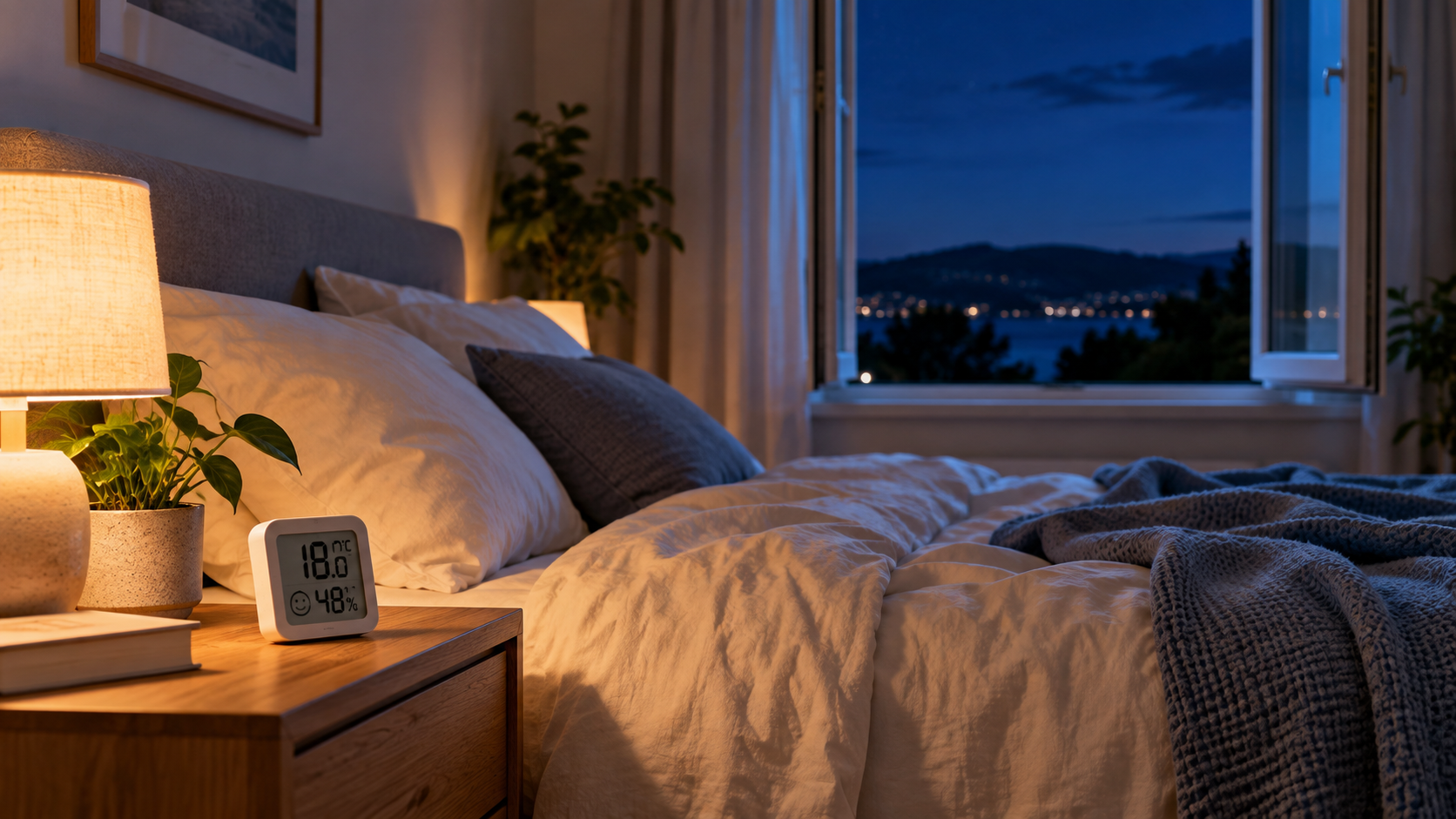
    Instead of trying to hit exactly 18°C, use it as a starting point and experiment. If you regularly wake up feeling hot, try lowering the room temperature slightly or using lighter bedding. If you wake up cold, adjust your bedding or increase the temperature a little.

    Small adjustments are usually enough. The best temperature is ultimately one that lets you sleep comfortably without regularly waking because you feel too hot or too cold.

    Signs Your Bedroom May Be Too Warm for Sleep

    You don’t necessarily need a thermometer to notice that your bedroom is too warm. Your body may already be giving you clues during the night.

    Possible signs include waking up sweaty, repeatedly throwing off the covers, feeling restless or waking during the night because you feel uncomfortably hot. You may also notice that you sleep better when the weather is cooler or when there is more airflow in the room.

    Before making major changes, try simple adjustments such as lighter bedding, breathable sleepwear, opening a window when appropriate or lowering the thermostat slightly. Then pay attention to whether your sleep feels more comfortable over several nights.

    Can Your Bedroom Be Too Cold?

    Yes. Cooler doesn’t automatically mean better. A bedroom that leaves you shivering or feeling uncomfortably cold can also interfere with sleep.

    Rather than heating the entire room significantly, you may be able to stay comfortable with appropriate pajamas, socks or an extra layer of bedding. This allows you to keep the surrounding air relatively cool while staying comfortably warm in bed.

    The aim is balance: a cool sleeping environment without making yourself cold.

    5 Practical Ways to Keep Your Bedroom Cool

    1. Improve Airflow

    If the weather and your surroundings allow it, opening a window or bedroom door can improve airflow and help warm air escape. A fan can also help circulate air and make the room feel more comfortable.

    2. Choose Lighter Bedding

    Heavy duvets and blankets can trap heat around your body. During warmer periods, try lighter bedding and adjust the number of layers so you can easily add or remove warmth during the night.

    3. Wear Breathable Sleepwear

    Your pajamas can affect how warm you feel just as much as your bedding. Lightweight, breathable sleepwear may help prevent you from becoming uncomfortably hot during the night.

    4. Reduce Heat During the Day

    On hot days, keeping curtains or blinds closed when direct sunlight reaches the bedroom can help prevent the room from heating up. When the outdoor temperature drops later, opening windows may help release some of the stored heat.

    5. Experiment Instead of Chasing a Perfect Number

    Use the temperature on your thermostat as a guide rather than a strict rule. Try small adjustments and pay attention to how comfortably you sleep over several nights.

    Your ideal setup may also change with the seasons, so the temperature and bedding that work in winter may not be right for summer.

    What About Humidity?

    Humidity can also affect how comfortable your bedroom feels. When the air is very humid, sweat evaporates less easily, which can make a warm bedroom feel even hotter and more uncomfortable.

    Very dry air can create different problems, such as a dry nose or throat. Rather than focusing on an exact humidity number, pay attention to whether the air in your bedroom feels unusually damp or dry and adjust ventilation or humidity when needed.

    Temperature, airflow, bedding and humidity all work together, so improving one of these factors may be enough to make your sleep environment more comfortable.

    Find the Temperature That Works for You

    A cool bedroom can support comfortable sleep, but there is no single temperature that is perfect for everyone. Around 18°C (65°F) can be a useful starting point, but your own comfort should guide the final setting.

    Experiment with small changes to the thermostat, bedding, sleepwear and airflow rather than changing everything at once. Pay attention to whether you wake because you’re hot or cold and adjust accordingly.

    The goal isn’t to achieve a perfect number on the thermostat. It’s to create a bedroom where temperature is one less thing getting between you and a good night’s sleep.

    Sources & Further Reading

  • How Stress Affects Sleep — and What You Can Do About It

    How Stress Affects Sleep — and What You Can Do About It

    Understanding how stress affects sleep is important because the two are closely connected. A stressful day can make it harder to switch off at night, while a poor night’s sleep can leave you feeling less able to cope with stress the following day.

    When this happens repeatedly, it can create a frustrating cycle: stress interferes with sleep, and lack of sleep makes everyday challenges feel even harder.

    Understanding this connection can help you recognize what is happening and take practical steps to calm your mind and protect your sleep.

    How Does Stress Affect Sleep?

    Stress activates systems in your body designed to keep you alert and ready to respond to challenges. This can be useful during the day, but it is less helpful when you’re trying to sleep.

    You may notice racing thoughts, tense muscles or a feeling that your mind simply won’t switch off. Stress can make it harder to fall asleep, contribute to waking during the night and make it difficult to settle again after waking.

    Not everyone reacts to stress in the same way. Some people mainly struggle to fall asleep, while others fall asleep normally but wake during the night thinking about work, relationships, finances or other concerns.

    The Stress–Sleep Cycle

    The relationship between stress and sleep works both ways. Stress can interfere with sleep, but poor sleep can also make it harder to manage stress the next day.

    After a restless night, you may feel more irritable, have difficulty concentrating or find ordinary problems more overwhelming than usual. That can increase stress during the day, which may then make it harder to relax when bedtime comes around again.

    Over time, worrying about sleep itself can become part of the cycle. Thoughts such as “I have to sleep tonight” or repeatedly checking how many hours are left before morning can create additional pressure just when you need to relax.

    Breaking this cycle doesn’t require eliminating stress completely. Instead, the goal is to reduce unnecessary stimulation before bed and develop ways to manage worries without bringing all of them into the bedroom.

    7 Ways to Reduce Stress Before Bed

    1. Give Your Worries a Time and Place

    Trying to push worries out of your mind often doesn’t work. Instead, give yourself a short period earlier in the evening to think about what is bothering you.

    Write down your main concerns, along with any practical steps you can take the next day. If there is nothing you can do about a problem tonight, acknowledge it and leave it on the page.

    This won’t make every worry disappear, but it can help create a boundary between problem-solving time and bedtime.

    2. Create a Clear End to Your Day

    Stress can follow you into the evening when there is no clear separation between work, responsibilities and personal time. This is especially easy when emails, messages and unfinished tasks are always within reach.

    Try creating a simple end-of-day ritual. Close your laptop, write down tomorrow’s priorities or tidy your workspace. The activity itself matters less than giving your brain a signal that today’s work is finished.

    3. Use Slow Breathing to Calm Your Body

    Stress isn’t only something you experience in your thoughts. You may also notice physical signs such as tense muscles, faster breathing or a feeling of restlessness.

    A few minutes of slow, comfortable breathing can help you shift your attention away from stressful thoughts and toward something simple and predictable. Let your breathing become gentle and unhurried rather than trying to follow a complicated technique.

    The goal isn’t to force yourself to relax or fall asleep. Think of it as giving your body an opportunity to slow down.

    4. Put Tomorrow’s Tasks on Paper

    A busy mind often tries to remember everything at exactly the wrong time. Appointments, unfinished tasks and things you must not forget tomorrow can suddenly feel urgent when you get into bed.

    Before your evening wind-down begins, write a short list of what you need to do the next day. Once it is written down, you no longer need to keep mentally rehearsing it.

    Keep the list simple. This isn’t the time to plan your entire week — the purpose is to give your brain permission to stop keeping track of everything for the night.

    5. Choose Calm Activities Instead of More Stimulation

    When you’re stressed, it can be tempting to distract yourself with social media, news, work or endless scrolling. These activities may take your mind off your worries temporarily, but they can also keep your brain engaged when you want it to slow down.

    Try replacing some of that stimulation with something quieter: reading, listening to calm music, taking a warm shower or simply sitting with a cup of caffeine-free tea.

    You don’t need a perfect evening routine. Even a short period of lower stimulation can create a useful transition between a stressful day and sleep.

    6. Separate What You Can Control From What You Can’t

    Stress often grows when your mind keeps searching for solutions to problems that cannot be solved tonight. Some concerns require action, while others involve uncertainty that you simply have to live with for the moment.

    Ask yourself whether there is something useful you can do about the problem right now. If there is, write down the next step. If there isn’t, remind yourself that continuing to think about it tonight is unlikely to change the situation.

    This doesn’t mean ignoring real problems. It means choosing a better time to deal with them.

    7. Don’t Turn Sleep Into Another Source of Stress

    After several difficult nights, it’s easy to start worrying about sleep itself. You may watch the clock, calculate how many hours you have left or become anxious as bedtime approaches.

    Try to avoid treating sleep as a test you have to pass. If you have a difficult night, remind yourself that one poor night’s sleep doesn’t mean the next night will be the same.

    Focus on creating conditions that support sleep rather than trying to control exactly when sleep happens.

    If worrying about sleep is making it difficult to drift off, see our guide to 7 practical strategies that can help you fall asleep faster.

    When Stress Becomes a Longer-Term Problem

    Everyone experiences stressful periods, and occasional sleep disruption during difficult times is common. But when stress continues for weeks or months, it can begin to affect both your sleep and how you function during the day.

    Persistent stress may show up as ongoing worry, irritability, difficulty concentrating, muscle tension or feeling unable to switch off. When poor sleep is added to the picture, the two problems can reinforce each other.

    If stress feels difficult to manage, is interfering with everyday life or is regularly preventing you from sleeping well, consider talking to a healthcare professional. You don’t need to wait until the problem becomes severe before asking for help.

    Better Sleep Won’t Remove Stress — But It Can Help

    Good sleep can’t eliminate stressful situations, but protecting your sleep can make it easier to cope with everyday challenges. At the same time, finding healthier ways to manage stress can make it easier to rest at night.

    Start with one small change rather than trying to completely redesign your evenings. Write down tomorrow’s tasks, create a clear end to your working day or spend a few quiet minutes slowing down before bed.

    The goal isn’t a perfectly stress-free life. It’s to prevent the stresses of the day from taking over your nights as well.

    Sources & Further Reading

  • Why Do I Keep Waking Up at Night? 8 Common Reasons

    Why Do I Keep Waking Up at Night? 8 Common Reasons

    Waking up during the night is normal from time to time. But if you regularly wake up and struggle to fall back asleep, those interruptions can leave you feeling tired and frustrated the next day.

    There are many possible reasons for disrupted sleep, ranging from your bedroom environment and daily habits to stress or an underlying sleep problem. Understanding what may be waking you up is the first step toward sleeping more peacefully.

    Here are eight common reasons you may keep waking up during the night.

    Why Do I Keep Waking Up at Night?

    1. Your Bedroom Is Too Warm, Noisy or Bright

    Your surroundings can affect how easily you stay asleep. A bedroom that is too warm, unexpected noises or light entering the room may cause brief awakenings — even if you don’t always remember them in the morning.

    Try keeping your bedroom cool, dark and quiet. Blackout curtains, reducing unnecessary light and limiting disruptive sounds may help create a more sleep-friendly environment.

    2. Stress or Worry Is Keeping Your Brain Alert

    Stress doesn’t always prevent you from falling asleep. Sometimes you fall asleep normally but wake during the night with your mind suddenly active. Worries about work, relationships, finances or the next day can make it difficult to relax again.

    If this happens often, try setting aside a little time earlier in the evening to write down worries or tasks for the next day. Relaxation techniques such as slow breathing may also help you settle when you wake up.

    3. Alcohol Is Disrupting Your Sleep

    Alcohol can make you feel sleepy and may help you fall asleep more quickly, but that doesn’t necessarily mean you will sleep well throughout the night. As your body processes alcohol, your sleep can become lighter and more fragmented.

    Drinking alcohol in the evening may therefore contribute to waking up during the second half of the night. If you often wake during the night, consider whether alcohol — particularly close to bedtime — could be playing a role.

    4. You Need to Use the Bathroom During the Night

    Waking up once during the night to use the bathroom can be normal, especially as you get older. But frequent bathroom trips can repeatedly interrupt your sleep and make it harder to feel rested in the morning.

    Drinking large amounts of fluid close to bedtime may contribute to the problem. Try getting most of your fluids earlier in the day and reducing how much you drink during the last couple of hours before bed.

    If you regularly need to urinate several times during the night, particularly if this is a new problem or is accompanied by other symptoms, consider discussing it with a healthcare professional.

    5. Caffeine Is Staying in Your System Longer Than You Think

    Caffeine can remain in your body for several hours, so coffee, tea, energy drinks or other sources of caffeine later in the day may still affect your sleep at night.

    Even if caffeine doesn’t stop you from falling asleep, it may contribute to lighter or more disrupted sleep. If you regularly wake during the night, experiment with avoiding caffeine in the afternoon and evening and see whether your sleep improves.

    6. Pain or Physical Discomfort Is Waking You Up

    Back pain, joint discomfort, headaches, heartburn and other physical symptoms can interrupt sleep. Sometimes the discomfort is mild enough that you fall asleep normally but becomes more noticeable when you move between sleep stages during the night.

    A comfortable mattress, pillow and sleeping position may help with minor discomfort. However, persistent or unexplained pain that regularly interferes with your sleep is worth discussing with a healthcare professional rather than simply trying to sleep through it.

    7. Snoring or Sleep Apnea Is Interrupting Your Sleep

    Sleep apnea causes repeated pauses or reductions in breathing during sleep. These interruptions can briefly wake your brain many times during the night, even though you may not remember waking up.

    Possible signs include loud snoring, gasping or choking during sleep, morning headaches and excessive daytime sleepiness. A partner may sometimes notice the breathing interruptions before you do.

    If you have symptoms that could suggest sleep apnea, talk to a healthcare professional. Sleep apnea can be treated, but it needs proper evaluation rather than self-diagnosis.

    8. Your Sleep Patterns May Be Changing With Age

    Sleep often changes as we get older. Older adults may spend more time in lighter stages of sleep and may wake more frequently during the night. Changes in health, medications and daily routines can also affect sleep.

    That doesn’t mean poor sleep should simply be accepted as part of getting older. If frequent awakenings are affecting how you feel or function during the day, it is still worth looking for possible causes and discussing persistent problems with a healthcare professional.

    What Can You Do If You Keep Waking Up at Night?

    The best solution depends on what is disrupting your sleep. Start by looking for patterns. Does it happen after drinking alcohol, during stressful periods, when your bedroom is warm or after having caffeine later in the day?

    Keeping a simple sleep diary for a week or two can help you notice connections between your daily habits and nighttime awakenings.

    If you wake up and cannot fall back asleep, try not to turn it into a battle. Avoid repeatedly checking the time. If you become frustrated and remain awake, get out of bed for a while and do something quiet in dim light until you feel sleepy again.

    If falling back asleep is the main problem, see our guide to 7 practical tips that can help you fall asleep faster.

    When Should You Talk to a Doctor?

    Occasional nighttime awakenings are common. But if you regularly wake during the night and the problem continues for weeks, affects your daytime energy or concentration, or makes you anxious about sleep, consider talking to a healthcare professional.

    You should also seek advice if you experience symptoms such as loud snoring, gasping or pauses in breathing during sleep, persistent pain, or frequent nighttime urination. Identifying and treating an underlying problem may improve both your sleep and your overall health.

    Better Sleep Starts With Understanding What’s Waking You Up

    Waking up during the night doesn’t always mean something is wrong. Brief awakenings are a normal part of sleep, and many people don’t even remember them.

    The problem is when you wake frequently, struggle to fall back asleep or regularly feel tired the next day. Rather than trying to fix everything at once, look for patterns and start with the factors most likely to be affecting your sleep. Small changes may be enough to make your nights more restful.

    Sources & Further Reading

  • How to Fall Asleep Faster: 7 Practical Tips That Can Help

    How to Fall Asleep Faster: 7 Practical Tips That Can Help

    Lying awake when you want to sleep can be frustrating. And the more you worry about not falling asleep, the more awake you may feel.

    If you’re wondering how to fall asleep faster, trying to force sleep may not be the answer. Instead, it can be more helpful to create conditions that allow your mind and body to settle down naturally. Here are seven practical strategies to try when falling asleep is the problem.

    7 Practical Tips on How to Fall Asleep Faster

    1. Don’t Try to Force Sleep

    Sleep isn’t something you can simply make happen through effort. In fact, putting pressure on yourself to fall asleep can increase frustration and make you more alert.

    Instead of thinking “I have to sleep now,” try focusing on resting comfortably. Taking away some of the pressure can make it easier to relax and allow sleep to come naturally.

    2. Use Slow Breathing to Relax

    When your mind is busy, slowing your breathing can give you something simple and calming to focus on. It may also help your body shift toward a more relaxed state.

    Try breathing gently and comfortably, allowing your exhale to be slow rather than forcing deep breaths. Focus on the sensation of breathing instead of checking whether you are becoming sleepy.

    There is no need to follow a complicated breathing formula. The aim is relaxation, not performing the exercise perfectly.

    3. Try Progressive Muscle Relaxation

    Sometimes you may feel mentally ready for sleep while your body is still tense. Progressive muscle relaxation is a simple technique that can help you become more aware of that tension and let it go.

    Starting with your feet and gradually moving upward, gently tense one muscle group for a few seconds and then release it. Notice the difference between tension and relaxation before moving to the next area.

    Keep the movements gentle. This should feel calming rather than like exercise.

    4. Get Racing Thoughts Out of Your Head

    For many people, bedtime is when unfinished tasks, worries and plans suddenly demand attention. Trying not to think about them can sometimes make them even harder to ignore.

    Consider keeping a notebook beside your bed or writing down tomorrow’s tasks earlier in the evening. If something important comes to mind, make a brief note and remind yourself that you can deal with it tomorrow.

    The goal isn’t to solve your problems at bedtime — it’s to give your mind permission to leave them until the next day.

    5. Stop Checking the Time

    Looking at the clock can quickly turn difficulty sleeping into a calculation: “If I fall asleep now, I’ll get five hours and 47 minutes.” That kind of thinking can create even more pressure.

    If you find yourself repeatedly checking the time, turn the clock away from you and keep your phone somewhere you cannot easily reach for it.

    You don’t need to know exactly how long you have been awake. Your job at that moment is simply to rest.

    6. Only Go to Bed When You Feel Sleepy

    Going to bed because the clock says you should doesn’t necessarily mean your body is ready to sleep. Spending long periods awake in bed can gradually strengthen the association between your bed and being awake.

    When possible, wait until you feel genuinely sleepy before going to bed. A regular wake-up time can also help your body develop a more predictable sleep rhythm.

    7. If You Can’t Sleep, Get Out of Bed for a While

    If you have been lying awake and are becoming frustrated, staying in bed and continuing to fight for sleep may not help.

    Consider getting up and doing something quiet and relaxing in dim light. Read something calm, listen to quiet music or simply sit comfortably. Return to bed when you begin to feel sleepy again.

    Avoid turning this into an opportunity to work, scroll through your phone or start stimulating activities. The purpose is to relax until sleepiness returns.

    What About Screens, Caffeine and Your Bedroom?

    They still matter. Caffeine late in the day, an uncomfortable sleep environment and stimulating activities before bedtime can all make sleep more difficult. But these are broader sleep habits rather than techniques for those moments when you’re already struggling to fall asleep.

    For advice on improving your overall sleep routine, see our guide to 10 simple habits for better sleep.

    How Long Should It Take to Fall Asleep?

    There is no perfect number of minutes that everyone should aim for, and constantly timing yourself can create unnecessary pressure. Some nights you will fall asleep more quickly than others.

    What matters more is whether difficulty falling asleep happens regularly, causes distress or leaves you struggling during the day.

    When Should You Get Help?

    Occasional difficulty falling asleep is common. Persistent insomnia is different and deserves attention, particularly when it begins to affect your mood, concentration, energy or everyday life.

    If you regularly have difficulty falling asleep or staying asleep despite having enough opportunity to sleep, consider talking to a healthcare professional. Cognitive behavioral therapy for insomnia (CBT-I) is an established treatment for chronic insomnia and focuses on changing thoughts and behaviors that interfere with sleep.

    Make Falling Asleep Less of a Battle

    Perhaps the most important idea is that sleep should not become another task you have to succeed at. The more pressure you put on yourself, the harder relaxing can become.

    Experiment with one or two of these strategies rather than trying everything at once. With time, you may discover which techniques make it easier for your mind and body to let the day go.

    Sources & Further Reading

  • The Best Bedtime Routine for Better Sleep

    The Best Bedtime Routine for Better Sleep

    The best bedtime routine is one that helps you unwind and makes the transition from a busy day to sleep feel easier. By repeating the same calming activities each evening, you give your mind and body time to slow down and prepare for rest.

    Your routine doesn’t need to be complicated or take hours. The key is to create a simple sequence that fits your life and that you can follow consistently.

    Here’s a practical bedtime routine you can adapt to your own schedule, starting about one to two hours before bed.

    1–2 Hours Before Bed: Start Slowing Down

    Begin by shifting away from work, demanding tasks and other activities that keep your mind highly engaged. If possible, finish your main evening meal and start creating a calmer atmosphere at home.

    You don’t have to follow the exact same timetable every night. Think of this as a gradual transition from daytime activity to rest rather than a strict set of rules.

    About 1 Hour Before Bed: Reduce Stimulation

    As bedtime gets closer, start reducing activities that keep your brain alert. This might mean putting work away, lowering the lights and taking a break from news, social media or anything else that tends to pull you in.

    If possible, try putting screens away during the last 30 minutes before bed. If you do use your phone, tablet or television earlier in the evening, reduce bright light and choose something relaxing rather than content that keeps you scrolling or highly engaged.

    The goal is simple: make the last part of your evening feel noticeably calmer than the rest of your day.

    About 30 Minutes Before Bed: Create a Relaxing Routine

    Now is a good time to choose a few simple activities that help you relax. You might take a warm shower or bath, read a book, listen to quiet music or spend a few minutes doing gentle stretches.

    If your mind tends to become busy at bedtime, try writing down anything you need to remember for tomorrow. Getting tasks and worries onto paper can make it easier to leave them for the next day.

    You can also try slow breathing or progressive muscle relaxation. The aim isn’t to make yourself fall asleep — it’s simply to help your body and mind become calmer.

    At Bedtime: Make Sleep the Natural Next Step

    When you feel sleepy, head to bed and let sleep be the natural next step in your routine. Keep your bedroom dark, quiet and comfortably cool, and try to leave phones and other distractions out of reach.

    Avoid putting pressure on yourself to fall asleep immediately. Some nights it will happen quickly, while other nights may take longer. The purpose of your bedtime routine is to create the right conditions for sleep, not to force it.

    If you regularly lie awake for a long time, it may help to wait until you feel genuinely sleepy before getting into bed.

    If falling asleep is often the difficult part, see our guide to 7 practical strategies that can help you fall asleep faster.

    What Should You Avoid Before Bed?

    A good bedtime routine isn’t only about what you do. A few things you do earlier in the evening can also make it harder to settle down and sleep well.

    Try to avoid large or heavy meals close to bedtime, and be aware that caffeine can affect sleep for hours after you consume it. If you’re sensitive to caffeine, consider moving your last coffee, tea or other caffeinated drink earlier in the day.

    Alcohol may make you feel sleepy at first, but it can disrupt sleep later in the night. If better sleep is your goal, relying on alcohol as a way to relax before bed isn’t a good strategy.

    Highly stimulating activities can also work against your wind-down routine. Work, intense exercise, arguments or endlessly scrolling through your phone may leave your mind more alert just when you’re trying to slow down.

    How Long Should a Bedtime Routine Be?

    There is no perfect length for a bedtime routine. For some people, 20 to 30 minutes is enough to relax, while others may prefer to start winding down an hour or more before bed.

    What matters most is consistency and choosing a routine that fits realistically into your life. A simple routine you follow most evenings is likely to be more useful than an elaborate routine you quickly give up.

    Start small. Choose two or three calming activities and repeat them in roughly the same order each evening. You can adjust your routine over time as you learn what helps you feel ready for sleep.

    Example of a Simple Bedtime Routine

    Your routine will depend on your schedule, but it can be helpful to see what a simple evening might look like. If you normally go to bed around 10:30 PM, for example, you could try something like this:

    9:00 PM — Start slowing down
    Finish work and demanding tasks, lower the lights and begin shifting into a quieter part of the evening.

    9:30 PM — Reduce stimulation
    Put away anything stressful, reduce unnecessary screen time and choose calmer activities.

    10:00 PM — Begin your relaxation routine
    Take a warm shower, read, listen to quiet music or try a few minutes of slow breathing.

    10:30 PM — Go to bed when you’re sleepy
    Keep the bedroom dark, quiet and comfortable, and allow yourself to rest without putting pressure on yourself to fall asleep immediately.

    These times are only an example. You can move the entire routine earlier or later to fit your own schedule. The important part is creating a predictable transition between your day and sleep.

    How to Make Your Bedtime Routine Stick

    The best bedtime routine is one you can actually maintain. Instead of changing your entire evening at once, start with one or two habits that feel easy to repeat.

    Try following roughly the same sequence each night, even if the exact timing changes occasionally. Over time, familiar activities can become signals that your day is winding down and sleep is approaching.

    Don’t worry about doing everything perfectly. Late dinners, social plans, travel and busy days will sometimes disrupt your routine. Simply return to it the following evening rather than treating one unusual night as a failure.

    Build a Routine That Works for You

    A bedtime routine doesn’t need special products, complicated techniques or a strict schedule. Its purpose is simply to create a calmer transition between being awake and going to sleep.

    Experiment with different activities and pay attention to what helps you feel relaxed and sleepy. Once you find a simple routine that works, consistency matters more than perfection.

    Sources & Further Reading

  • How Much Sleep Do You Really Need?

    How Much Sleep Do You Really Need?

    Sleep is essential for your health and wellbeing, but how much sleep do you really need? Eight hours is often mentioned as the ideal amount, but there isn’t one number that’s right for everyone.

    Your sleep needs can change with age and may also vary from person to person. Understanding the general recommendations — and paying attention to how you feel during the day — can help you find a sleep routine that works for you.

    How Many Hours of Sleep Do Adults Need?

    For most adults, regularly getting at least seven hours of sleep is recommended. Some people naturally need more than this to feel rested and function at their best.

    Sleep needs also change throughout life. Children and teenagers generally need considerably more sleep than adults, while older adults still need substantial sleep even though their sleep patterns may change.

    Recommended Sleep by Age

    AgeRecommended Sleep
    4–12 months12–16 hours, including naps
    1–2 years11–14 hours, including naps
    3–5 years10–13 hours, including naps
    6–12 years9–12 hours
    13–17 years8–10 hours
    18–60 years7 or more hours
    61–64 years7–9 hours
    65 years and older7–8 hours

    These are general recommendations rather than exact targets for every individual. Your own sleep needs may vary, and sleep quality matters as well as the number of hours you spend asleep.

    Is Eight Hours of Sleep Really Necessary?

    Eight hours can be a useful reference point, but it isn’t a universal requirement. One person may feel well rested after seven and a half hours, while another may function better with eight and a half or nine.

    Rather than focusing on exactly eight hours, consider whether you regularly get enough sleep to wake reasonably refreshed and stay alert throughout the day.

    Can You Get Too Much Sleep?

    Sleeping longer occasionally isn’t necessarily a problem. You might sleep more when recovering from sleep loss, illness, unusually demanding exercise or a stressful period.

    However, regularly sleeping much longer than usual while still feeling tired can be worth discussing with a healthcare professional. Persistent tiredness may sometimes be related to poor sleep quality, a sleep disorder, medication or another health issue.

    If you regularly get enough hours of sleep but still feel exhausted in the morning, explore 7 common reasons you may be waking up tired.

    Sleep Quality Matters Too

    The number of hours you sleep tells only part of the story. Seven or eight hours of frequently interrupted sleep may leave you feeling less rested than a similar amount of more continuous, good-quality sleep.

    Noise, light, stress, caffeine, alcohol and an inconsistent sleep schedule can all affect how well you sleep. Improving these factors can sometimes be just as important as spending more time in bed.

    For practical ways to improve your sleep routine, see our guide to 10 simple habits for better sleep.

    How Can You Find Your Ideal Amount of Sleep?

    Start by giving yourself enough time to sleep without regularly cutting your night short. Keep your bedtime and wake-up time reasonably consistent and notice how you feel over the following days.

    Ask yourself a few simple questions: Do you wake feeling reasonably refreshed? Can you stay alert during the day? Do you regularly struggle to stay awake when sitting quietly? Do you depend heavily on caffeine just to get through the day?

    A simple sleep diary can also help. Record when you go to bed, when you wake up and how rested you feel each morning. After a couple of weeks, you may begin to see a pattern.

    When Should You Talk to a Doctor?

    If you consistently allow enough time for sleep but remain very tired during the day, it may be worth discussing your sleep with a healthcare professional.

    You should also seek medical advice if you experience symptoms such as loud habitual snoring, waking up gasping or choking, repeated breathing pauses noticed by someone else, or severe daytime sleepiness.

    The Right Amount of Sleep Is Personal

    Sleep recommendations provide a useful starting point, but they shouldn’t become a nightly score you have to achieve perfectly. What matters is getting enough good-quality sleep on a regular basis to support your health and daytime functioning.

    Instead of chasing a perfect number, aim for a consistent routine, give yourself sufficient opportunity to sleep and pay attention to how you actually feel during the day.

    Sources & Further Reading

    CDC — About Sleep

    American Academy of Sleep Medicine — Recommended Amount of Sleep for Pediatric Populations

    National Institute on Aging — Sleep and Older Adults