
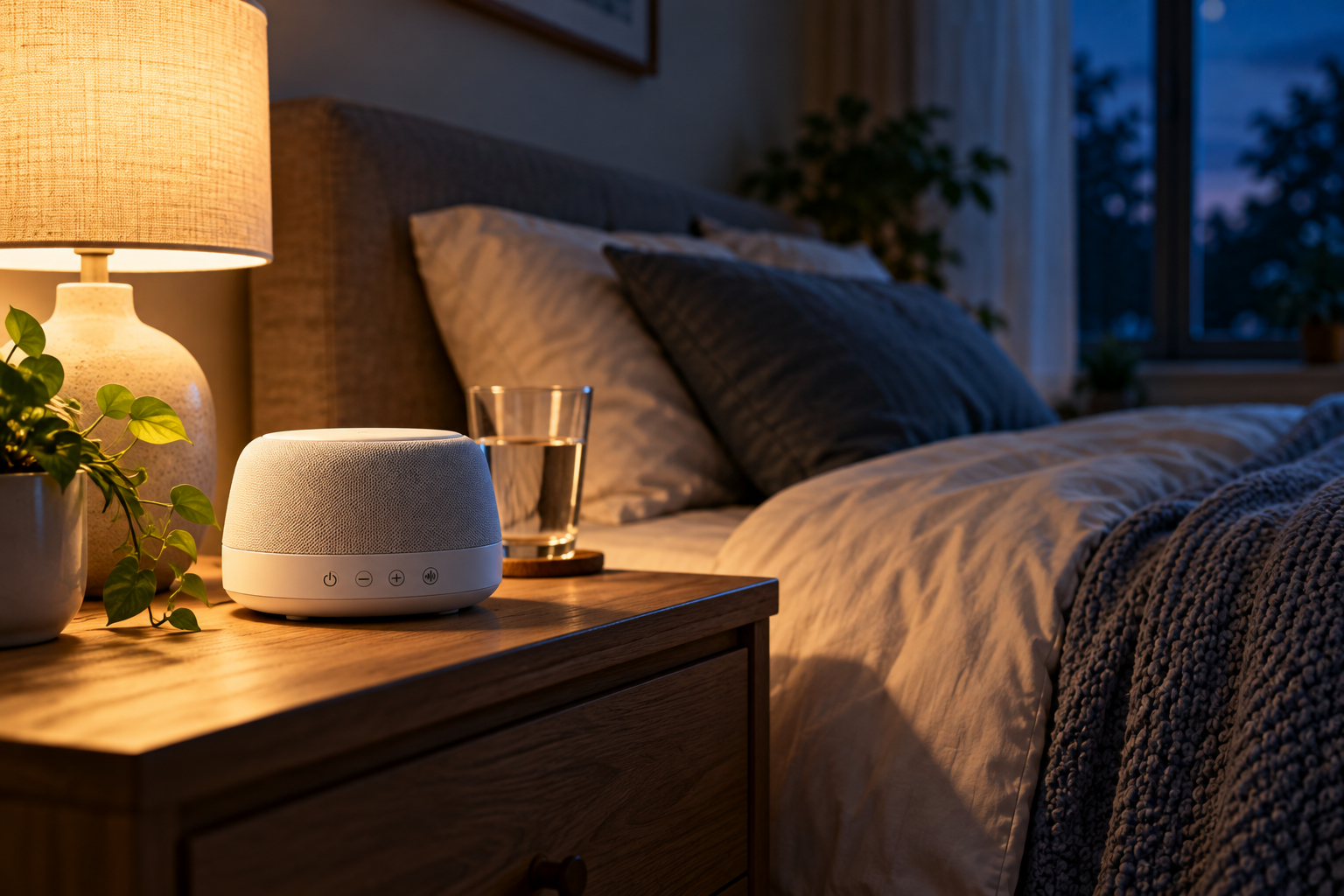
A fan humming in the background, rainfall sounds or a white noise machine can make a bedroom feel calmer. Many people use steady background sounds to help them fall asleep or avoid being disturbed by noises during the night.
The idea is simple: a consistent sound may make sudden noises — such as traffic, voices or a door closing — less noticeable. But can white noise help you sleep better, or does it simply make the bedroom sound more relaxing?
Research has produced mixed results, and white noise may be more helpful in some situations than others. Let’s look at what we know and whether it could be worth trying.
What Is White Noise?
White noise is a steady sound that contains many different sound frequencies at roughly equal intensity. The result is the familiar “hissing” sound you might hear from a fan, air conditioner or white noise machine.
Because the sound is continuous, it can help mask sudden changes in the surrounding environment. A passing car, voices in another room or other intermittent noises may become less noticeable against a constant background sound.
White noise is only one type of background noise used for sleep. Pink noise and brown noise have different frequency patterns and tend to sound deeper or softer. Many sleep apps and sound machines also offer nature sounds such as rain, waves or wind, which aren’t technically white noise at all.
Does White Noise Actually Help You Sleep?
White noise may help some people sleep, particularly when unwanted sounds are disturbing their sleep. By creating a steady background sound, white noise can make sudden noises less noticeable and may make it easier to fall asleep or stay asleep.
However, research on white noise and sleep is still limited, and the results have been mixed. Some studies have found improvements in sleep in noisy environments, while others have found little benefit.
This means white noise shouldn’t be viewed as a proven treatment for sleep problems. It may be more useful as a practical tool for masking disruptive sounds — for example, traffic, neighbors or other noises that are difficult to eliminate.
If your bedroom is already quiet and you sleep well without background noise, there may be little reason to add white noise simply because it is popular.
Who Might Benefit From White Noise?
White noise may be most useful for people whose sleep is regularly disturbed by unpredictable sounds. If you live near a busy road, have noisy neighbors or share a home with people who keep different schedules, a steady background sound may make those interruptions less noticeable.
It may also be useful when you’re sleeping somewhere unfamiliar, such as a hotel, where new sounds can make it harder to relax.
However, white noise won’t address other common causes of poor sleep, such as stress, caffeine, an inconsistent sleep schedule or an underlying sleep disorder. If noise isn’t the reason you’re struggling to sleep, adding background sound may not make much difference.
How Loud Should White Noise Be?
White noise doesn’t need to be loud to mask background sounds. The goal is to create a gentle, consistent sound that makes sudden noises less noticeable — not to drown out everything around you.
Keep the volume at a comfortable level and avoid placing a speaker or white noise machine directly beside your head. If the sound feels intrusive, makes conversation difficult or leaves your ears ringing, it is too loud.
If you use white noise every night, choosing the lowest volume that still masks the disturbing sounds is a sensible approach.
White Noise Machine, Fan or App — Does It Matter?
You don’t necessarily need a dedicated white noise machine. A fan, smartphone app or speaker can all provide steady background sound, and the best option depends largely on what you find comfortable and convenient.
Dedicated white noise machines can be useful because they’re designed to run continuously and don’t require your phone during the night. Many also offer different sounds and volume settings.
A fan provides both background sound and airflow, while an app can be an inexpensive way to experiment with white noise before buying anything. If you use your phone, consider keeping the screen off and placing the device away from the bed rather than directly beside your head.
The source of the sound may matter less than finding a steady, comfortable sound at a reasonable volume that doesn’t disturb your sleep.
White Noise vs. Pink Noise vs. Brown Noise
White, pink and brown noise all contain a range of sound frequencies, but they distribute those frequencies differently. This gives each type of noise a noticeably different sound.
White noise has a brighter, more consistent “hissing” quality. Pink noise emphasizes lower frequencies more than white noise and often sounds softer, similar to steady rainfall. Brown noise emphasizes the lower frequencies even more, creating a deeper sound that some people compare to a strong waterfall or distant rumbling.
Some people simply find one type more relaxing than another. Although researchers have studied different types of sound and sleep, there isn’t strong evidence that one color of noise is universally best for sleeping.
Rather than searching for the scientifically “perfect” sound, try different options at a comfortable volume and see which — if any — helps you sleep without becoming distracting.
Can You Become Dependent on White Noise?
Using white noise regularly doesn’t mean you are becoming physically dependent on it. However, it is possible to become accustomed to falling asleep with a particular sound in the background.
Over time, white noise may become part of the routine your brain associates with bedtime. This isn’t necessarily a problem if it helps you sleep and is easy to use, but it could become inconvenient when you’re traveling or sleeping somewhere without your usual sound.
If you’re concerned about relying on white noise, try occasionally sleeping without it or gradually lowering the volume. You can also reserve it for nights when outside noise is actually likely to disturb your sleep.
The goal isn’t to train yourself to need white noise. It’s simply one tool you can use when your sleeping environment is noisier than you’d like.
How to Try White Noise for Sleep
If you’re curious about whether white noise could improve your sleep, you don’t need to invest in expensive equipment. Start with a simple experiment and pay attention to how you respond.
1. Choose a Sound You Find Comfortable
Try white noise, pink noise or a gentle background sound such as rainfall. Choose something that feels calming rather than distracting.
2. Keep the Volume Low
Use the lowest comfortable volume that helps mask unwanted sounds. Place the speaker or sound machine away from your head.
3. Try It for Several Nights
Use the sound consistently for a few nights and notice whether you fall asleep more easily or wake up less often. Avoid changing several other sleep habits at the same time, so it’s easier to judge whether the sound makes a difference.
4. Compare Your Sleep With and Without It
Try sleeping without background sound on some nights. If you notice no improvement, there’s no reason to keep using it. If it helps, you can make it part of your bedtime routine.
Is White Noise Worth Trying for Better Sleep?
White noise may be worth trying if traffic, neighbors or other unpredictable sounds regularly disturb your sleep. A gentle, steady background sound can make these interruptions less noticeable and may help you rest more comfortably.
However, white noise isn’t a guaranteed solution for poor sleep. Research findings remain mixed, and some people may notice little or no benefit.
The best approach is to experiment with a comfortable sound at a low volume and see whether it makes a difference. You don’t need an expensive machine, and if you already sleep well in a quiet bedroom, there’s no reason to add background noise unnecessarily.
Ultimately, a peaceful sleep environment is more important than any particular sound or device.