
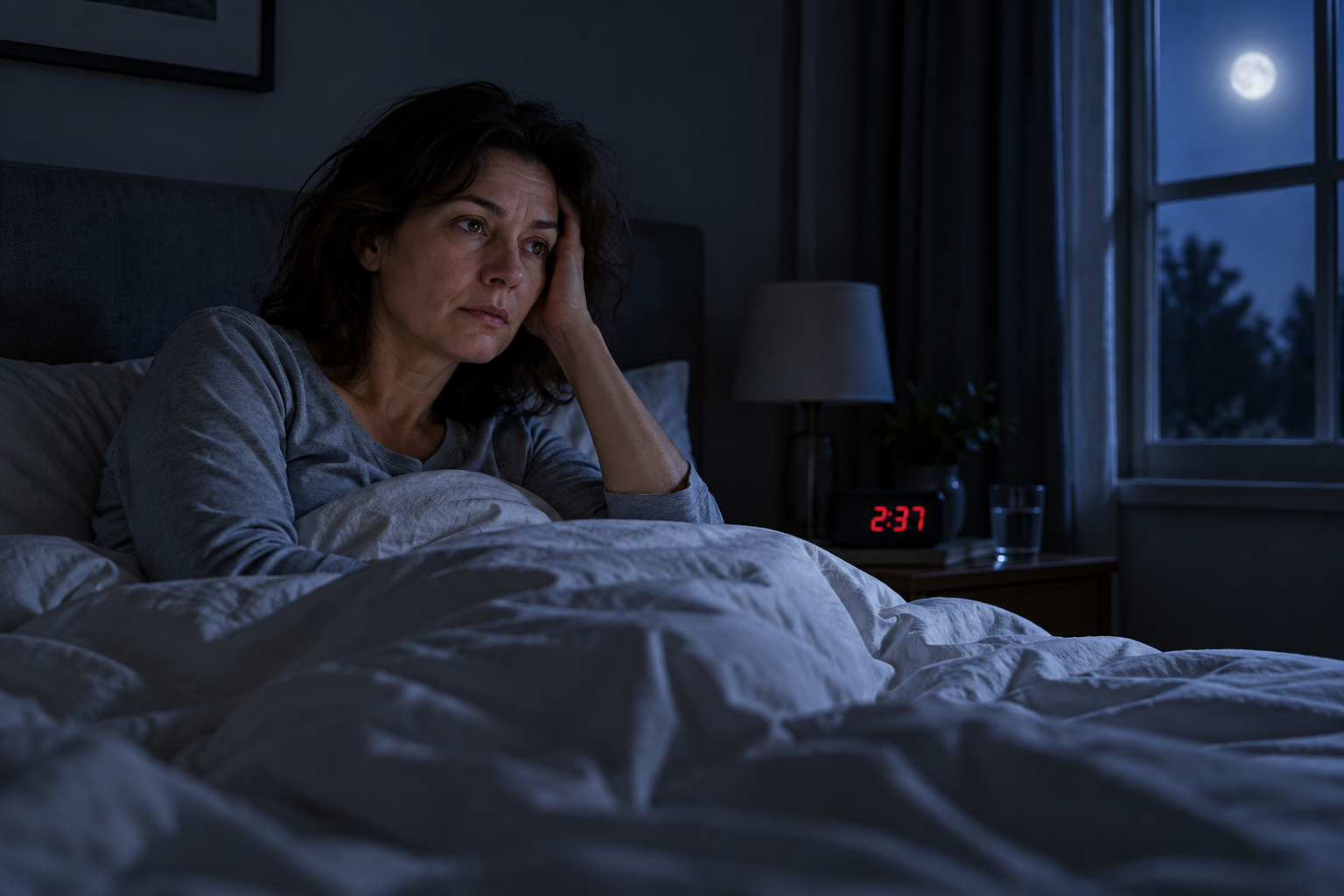
Waking up during the night is normal from time to time. But if you regularly wake up and struggle to fall back asleep, those interruptions can leave you feeling tired and frustrated the next day.
There are many possible reasons for disrupted sleep, ranging from your bedroom environment and daily habits to stress or an underlying sleep problem. Understanding what may be waking you up is the first step toward sleeping more peacefully.
Here are eight common reasons you may keep waking up during the night.
Why Do I Keep Waking Up at Night?
1. Your Bedroom Is Too Warm, Noisy or Bright
Your surroundings can affect how easily you stay asleep. A bedroom that is too warm, unexpected noises or light entering the room may cause brief awakenings — even if you don’t always remember them in the morning.
Try keeping your bedroom cool, dark and quiet. Blackout curtains, reducing unnecessary light and limiting disruptive sounds may help create a more sleep-friendly environment.
2. Stress or Worry Is Keeping Your Brain Alert
Stress doesn’t always prevent you from falling asleep. Sometimes you fall asleep normally but wake during the night with your mind suddenly active. Worries about work, relationships, finances or the next day can make it difficult to relax again.
If this happens often, try setting aside a little time earlier in the evening to write down worries or tasks for the next day. Relaxation techniques such as slow breathing may also help you settle when you wake up.
3. Alcohol Is Disrupting Your Sleep
Alcohol can make you feel sleepy and may help you fall asleep more quickly, but that doesn’t necessarily mean you will sleep well throughout the night. As your body processes alcohol, your sleep can become lighter and more fragmented.
Drinking alcohol in the evening may therefore contribute to waking up during the second half of the night. If you often wake during the night, consider whether alcohol — particularly close to bedtime — could be playing a role.
4. You Need to Use the Bathroom During the Night
Waking up once during the night to use the bathroom can be normal, especially as you get older. But frequent bathroom trips can repeatedly interrupt your sleep and make it harder to feel rested in the morning.
Drinking large amounts of fluid close to bedtime may contribute to the problem. Try getting most of your fluids earlier in the day and reducing how much you drink during the last couple of hours before bed.
If you regularly need to urinate several times during the night, particularly if this is a new problem or is accompanied by other symptoms, consider discussing it with a healthcare professional.
5. Caffeine Is Staying in Your System Longer Than You Think
Caffeine can remain in your body for several hours, so coffee, tea, energy drinks or other sources of caffeine later in the day may still affect your sleep at night.
Even if caffeine doesn’t stop you from falling asleep, it may contribute to lighter or more disrupted sleep. If you regularly wake during the night, experiment with avoiding caffeine in the afternoon and evening and see whether your sleep improves.
6. Pain or Physical Discomfort Is Waking You Up
Back pain, joint discomfort, headaches, heartburn and other physical symptoms can interrupt sleep. Sometimes the discomfort is mild enough that you fall asleep normally but becomes more noticeable when you move between sleep stages during the night.
A comfortable mattress, pillow and sleeping position may help with minor discomfort. However, persistent or unexplained pain that regularly interferes with your sleep is worth discussing with a healthcare professional rather than simply trying to sleep through it.
7. Snoring or Sleep Apnea Is Interrupting Your Sleep
Sleep apnea causes repeated pauses or reductions in breathing during sleep. These interruptions can briefly wake your brain many times during the night, even though you may not remember waking up.
Possible signs include loud snoring, gasping or choking during sleep, morning headaches and excessive daytime sleepiness. A partner may sometimes notice the breathing interruptions before you do.
If you have symptoms that could suggest sleep apnea, talk to a healthcare professional. Sleep apnea can be treated, but it needs proper evaluation rather than self-diagnosis.
8. Your Sleep Patterns May Be Changing With Age
Sleep often changes as we get older. Older adults may spend more time in lighter stages of sleep and may wake more frequently during the night. Changes in health, medications and daily routines can also affect sleep.
That doesn’t mean poor sleep should simply be accepted as part of getting older. If frequent awakenings are affecting how you feel or function during the day, it is still worth looking for possible causes and discussing persistent problems with a healthcare professional.
What Can You Do If You Keep Waking Up at Night?
The best solution depends on what is disrupting your sleep. Start by looking for patterns. Does it happen after drinking alcohol, during stressful periods, when your bedroom is warm or after having caffeine later in the day?
Keeping a simple sleep diary for a week or two can help you notice connections between your daily habits and nighttime awakenings.
If you wake up and cannot fall back asleep, try not to turn it into a battle. Avoid repeatedly checking the time. If you become frustrated and remain awake, get out of bed for a while and do something quiet in dim light until you feel sleepy again.
If falling back asleep is the main problem, see our guide to 7 practical tips that can help you fall asleep faster.
When Should You Talk to a Doctor?
Occasional nighttime awakenings are common. But if you regularly wake during the night and the problem continues for weeks, affects your daytime energy or concentration, or makes you anxious about sleep, consider talking to a healthcare professional.
You should also seek advice if you experience symptoms such as loud snoring, gasping or pauses in breathing during sleep, persistent pain, or frequent nighttime urination. Identifying and treating an underlying problem may improve both your sleep and your overall health.
Better Sleep Starts With Understanding What’s Waking You Up
Waking up during the night doesn’t always mean something is wrong. Brief awakenings are a normal part of sleep, and many people don’t even remember them.
The problem is when you wake frequently, struggle to fall back asleep or regularly feel tired the next day. Rather than trying to fix everything at once, look for patterns and start with the factors most likely to be affecting your sleep. Small changes may be enough to make your nights more restful.